
Replace the pile of disconnected tools.
A connected workspace can handle the contact history, pipeline, conversations, calendars, review requests, campaigns, forms, and reporting that otherwise get split across separate subscriptions.
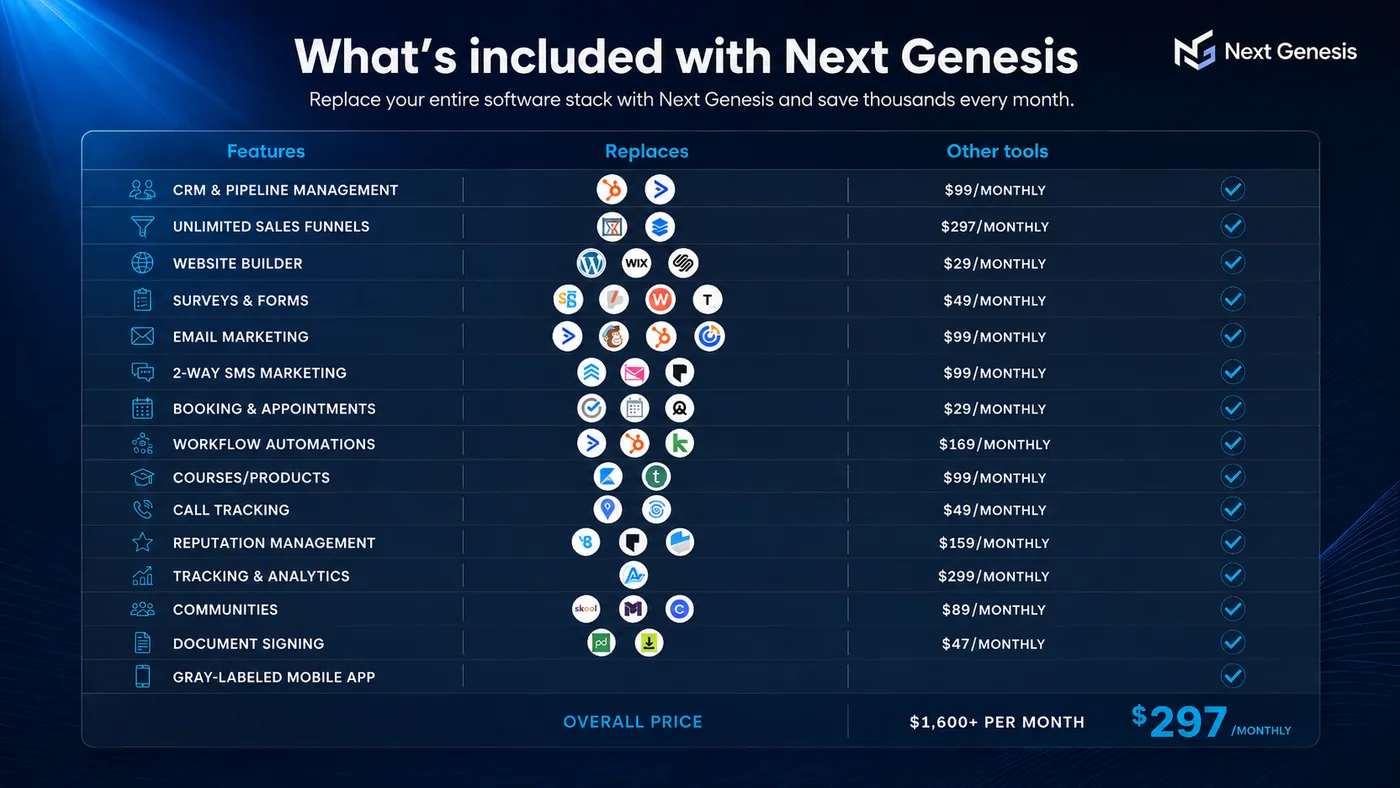
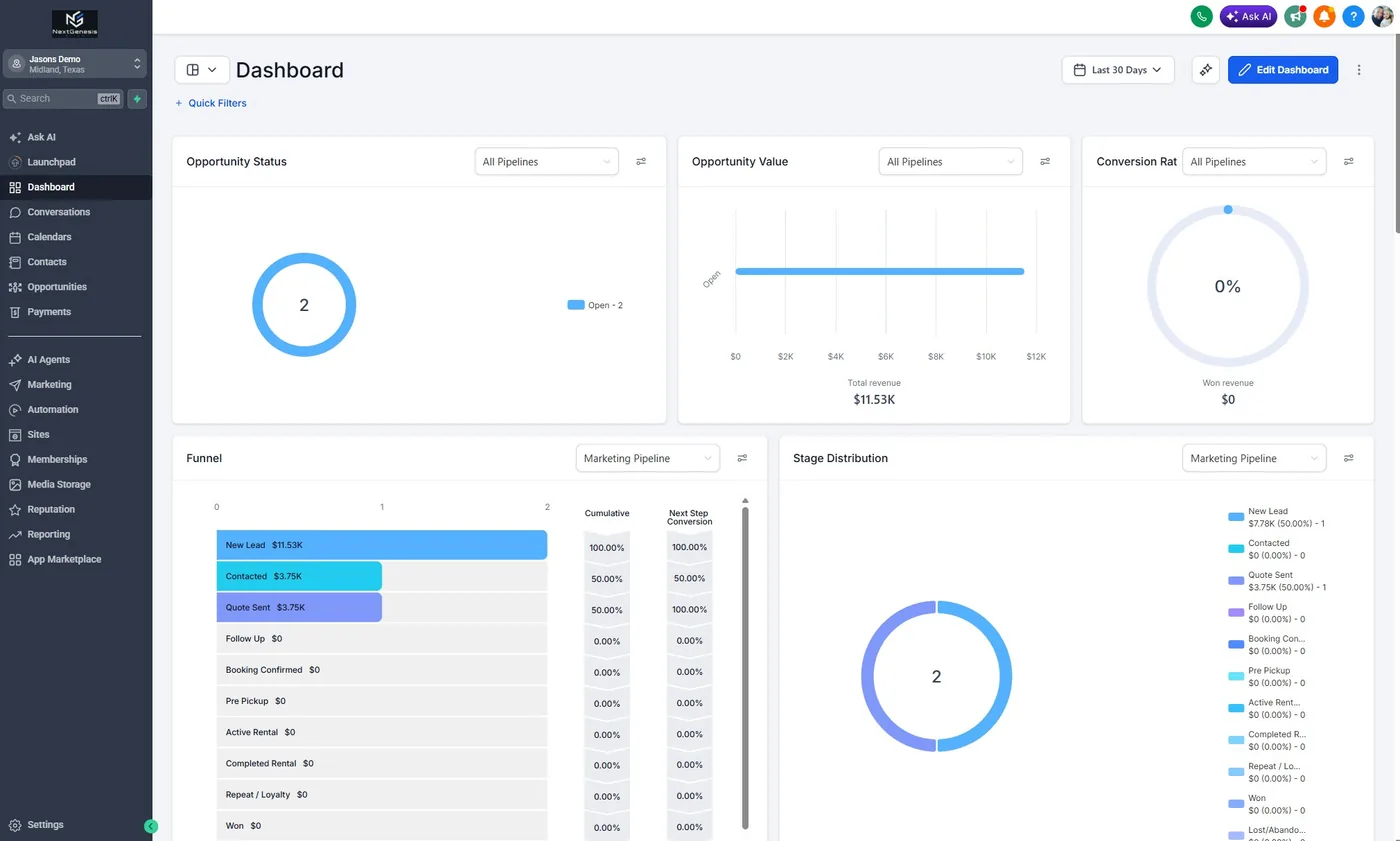
A CRM is useful when it removes hunting, copying, and remembering. Calls, texts, website forms, estimates, appointments, follow-up, payments, marketing, and reviews can move through one customer record instead of disappearing across separate apps.

A form submission is not useful if it lands in an inbox nobody checks. The contact record should show where the lead came from, what they asked for, who owns the next step, and whether the conversation has moved toward an estimate or appointment.
Useful automation confirms a request, creates the right task, reminds the right person, and stops when the customer responds. It should reduce dropped steps without pretending every customer conversation can run unattended.
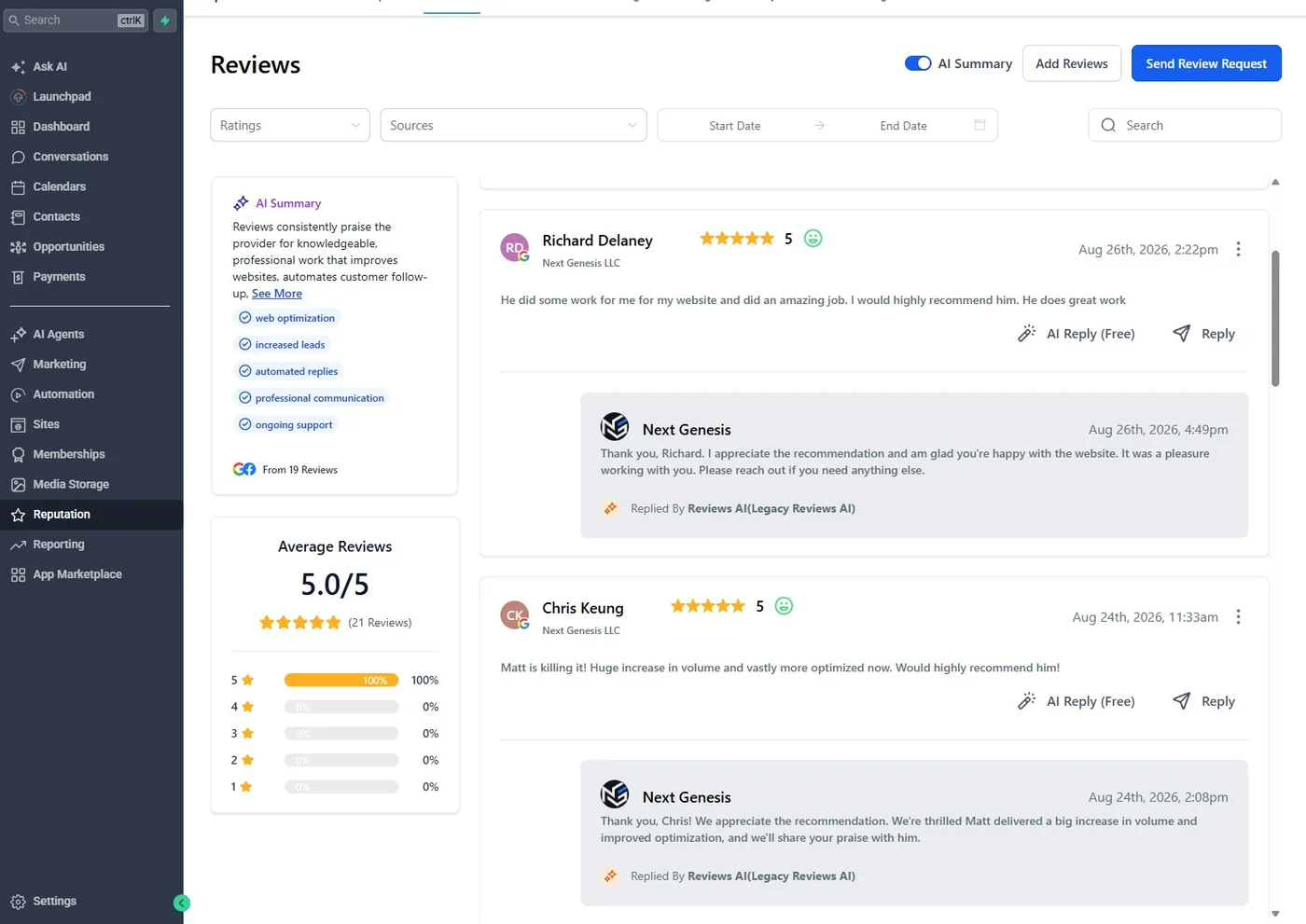
The best time to request a review is after a real job reaches the right completed stage. Connecting requests and replies to the CRM makes the review engine part of the workflow instead of another dashboard someone has to remember to open.
Your customer records and business content remain yours. Hosting, automation, messaging, and licensed CRM functions depend on an active service, so exports and transition steps should be planned before access ends.
A connected workspace can handle the contact history, pipeline, conversations, calendars, review requests, campaigns, forms, and reporting that otherwise get split across separate subscriptions.
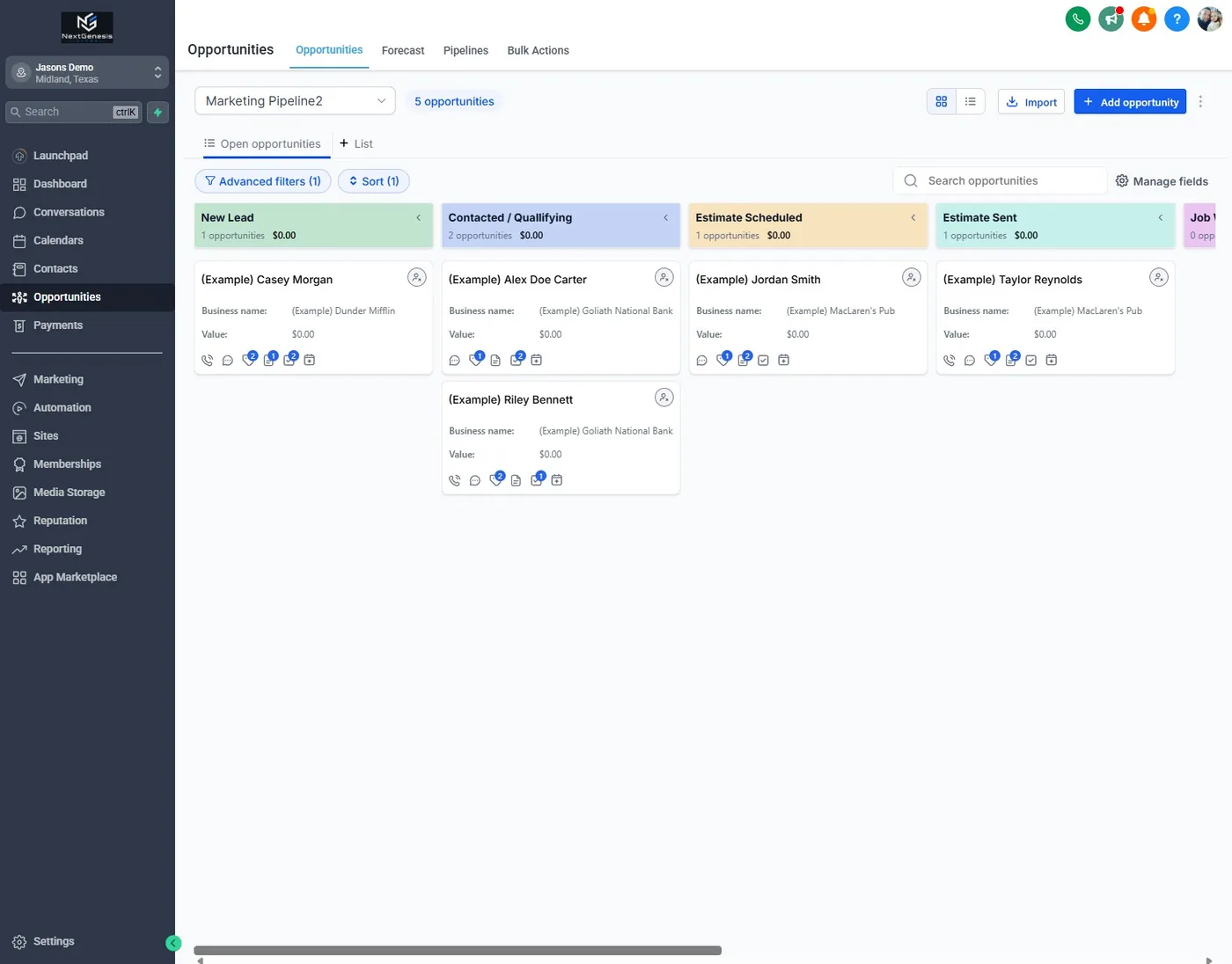
A useful dashboard shows the health of the system: new conversations, open opportunities, upcoming appointments, and the work that is waiting for a response.

Pipeline stages turn a contact list into an operating view. The team can see who is new, who needs an estimate, who is deciding, and which jobs are won or closed.

Review requests can trigger from the right completed stage, reminders can stop after a response, and replies can be handled from the same system that already knows the customer.

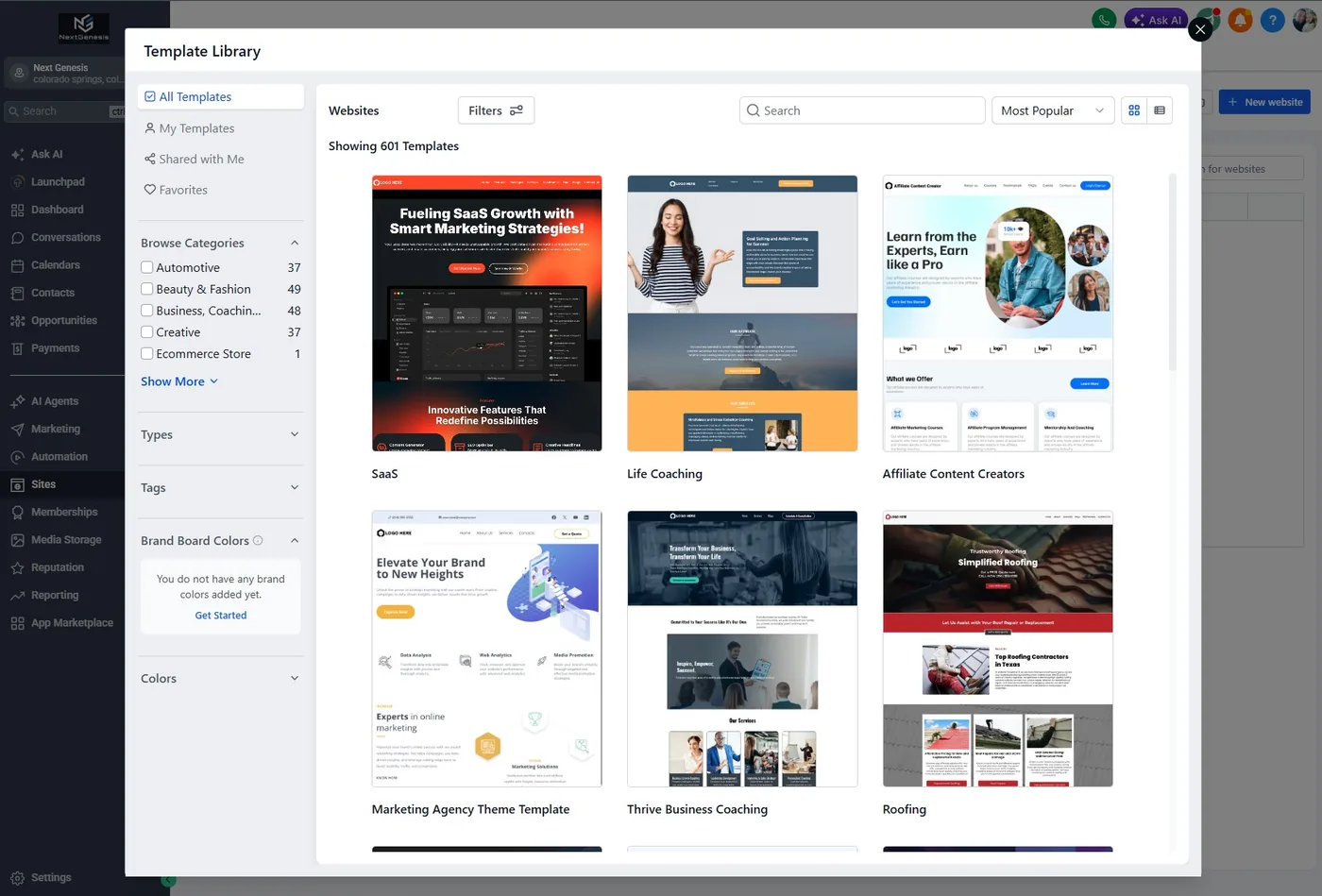
Forms and templates create a consistent intake process for estimates, appointments, campaigns, and follow-up while still leaving room for the details that make each service different.

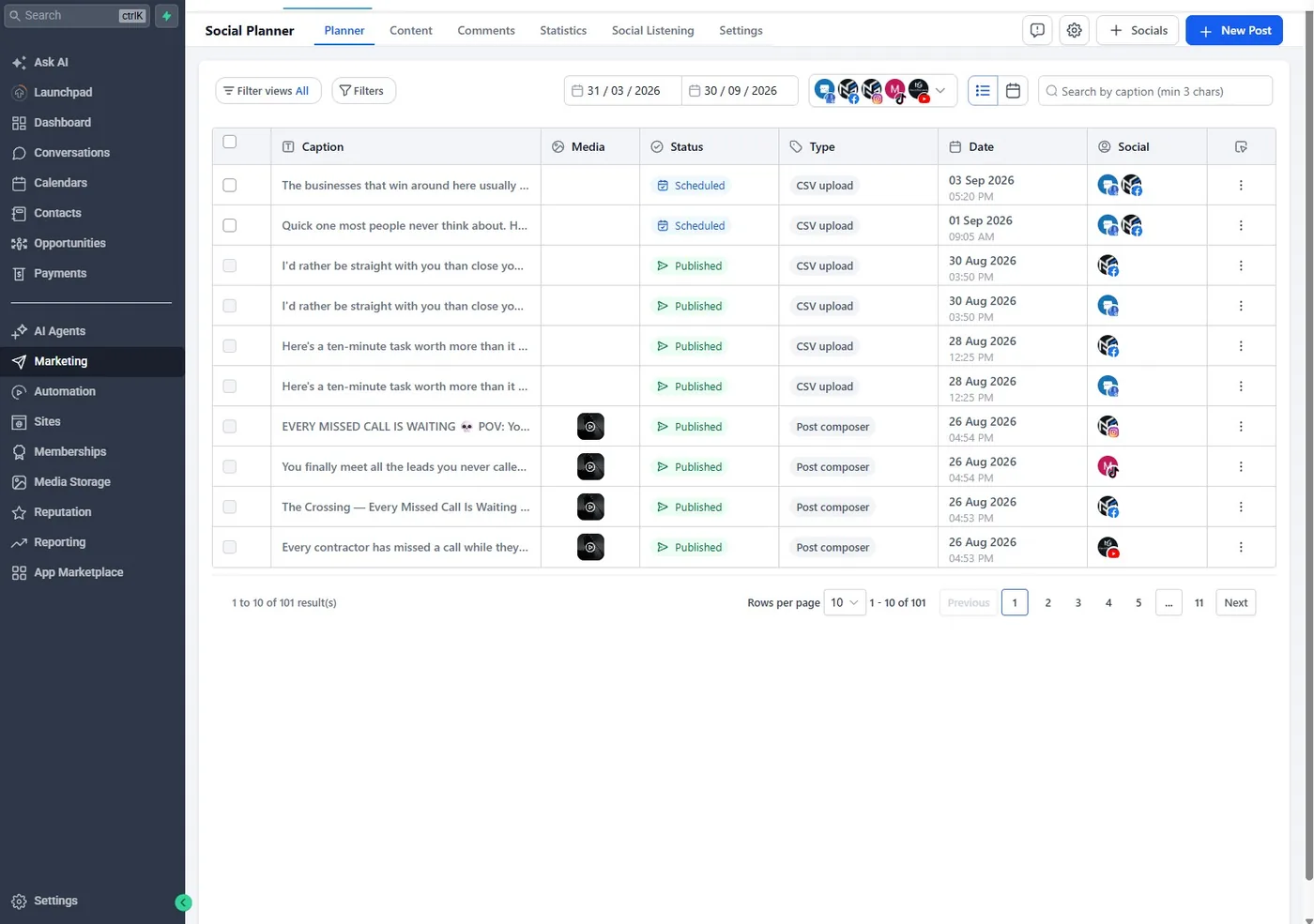
A shared publishing calendar keeps planned content visible and gives the business one place to coordinate posts instead of passing files and dates between unrelated apps.

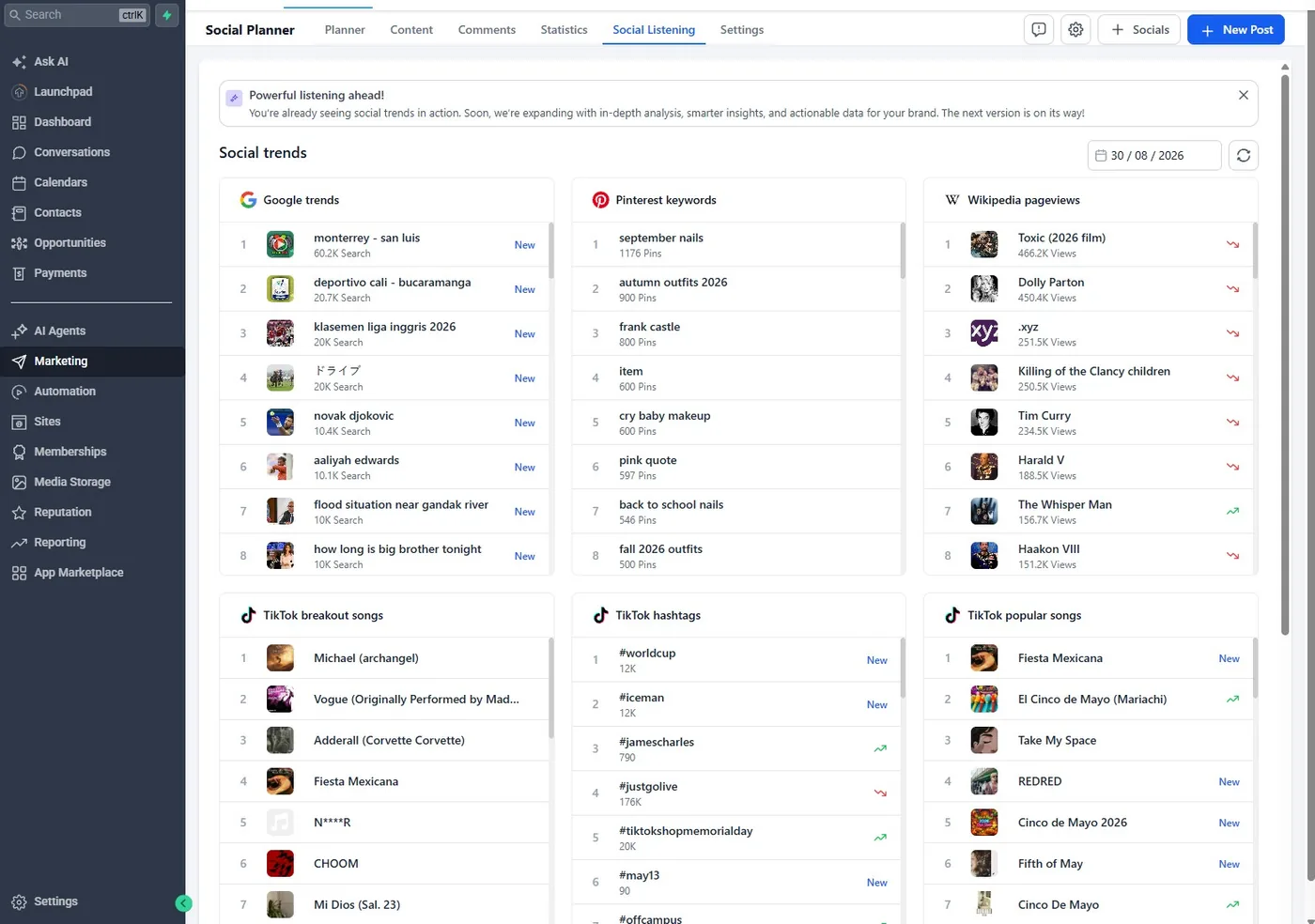
Social listening brings relevant mentions and public conversations into view so the business can respond with context instead of discovering them days later.

Our plans connect your website, Google presence and CRM, with AI communication, content and advertising available as you grow. See Pricing for the features included in each plan.